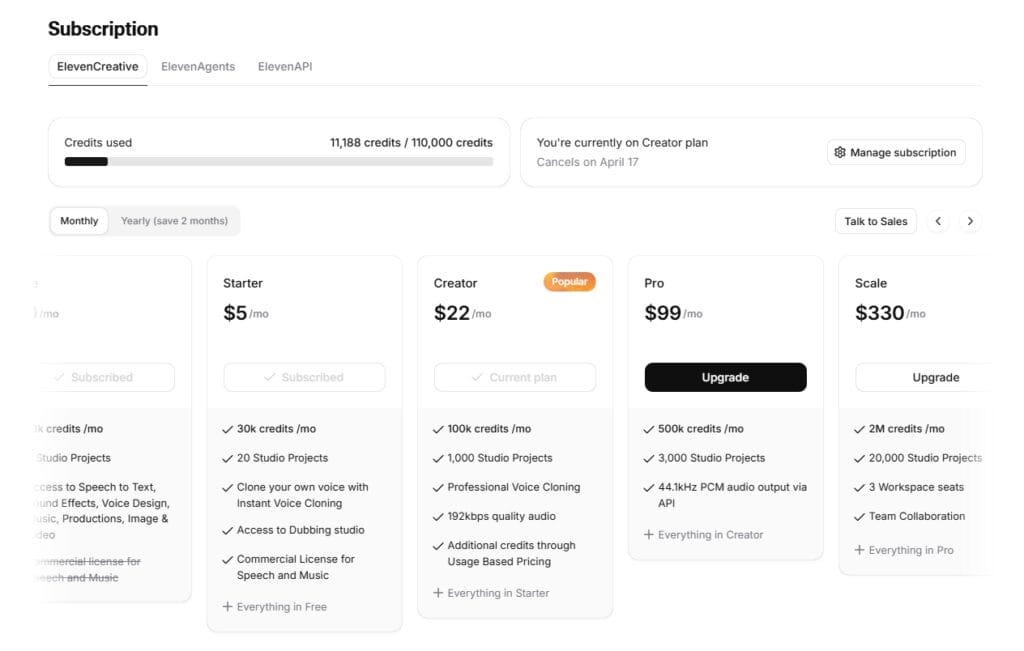
ElevenLabs is still one of the best AI voice tools on the market. I use it in my own content workflow, and overall, I think it deserves the hype. If you’ve read my full ElevenLabs review, you already know I use it in my own content pipeline.
But that does not mean it is the right tool for everyone.
For some people, the price is the issue. For others, it is the workflow. And in some cases, people are not even looking for the best overall tool. They just want the best tool for their own use case.
That is where most comparison articles get lazy. They list a few tools, repeat feature pages, and call it a day. That is not very useful if you are actually trying to decide where to spend your money.
So in this guide, I am not just listing random ElevenLabs alternatives. I am breaking down five realistic options for solo creators and small teams, and more importantly, I am telling you who each tool is actually for.
Because if you do not need everything ElevenLabs is good at, you may not need ElevenLabs at all.
Table of Contents
Quick Comparison: ElevenLabs Alternatives at a Glance
| Tool | Best For | Free Plan | Starting Price | Voice Quality |
|---|---|---|---|---|
| Murf AI | Solo creators, voiceover work | ✅ Limited | ~$19/mo | ⭐⭐⭐⭐ |
| Play.ht | Blog audio, light TTS use | ✅ Limited | ~$31/mo | ⭐⭐⭐⭐ |
| Descript | Video/podcast creators | ✅ Limited | ~$24/mo | ⭐⭐⭐⭐ |
| Speechify | Reading, accessibility, study | ✅ | ~$139/yr | ⭐⭐⭐ |
| Cartesia | Developers, real-time apps | ✅ API credits | Usage-based | ⭐⭐⭐⭐⭐ |
Still considering ElevenLabs? Check current pricing here → (affiliate link)
Murf AI is the safest starting point for most solo creators. It is simple, polished, and close enough to ElevenLabs for many everyday voiceover tasks.
Play.ht is more useful for blog audio and light text-to-speech work, especially if you want WordPress integration. But I would not trust it blindly before testing stability for yourself.
Descript is not really a pure ElevenLabs replacement. It is more of an editing platform with voice features built in. That makes it a strong choice for video and podcast creators, but not the best value if all you want is clean TTS.
Speechify is excellent for listening, accessibility, and productivity. As a content creation tool, though, it is clearly weaker than the other options on this list.
Cartesia is the most technically impressive one here. But it is built much more for developers than for normal creators. If you want a clean point-and-click experience, this is probably not your tool.
1. Murf AI — Best for Solo Creators Who Want Studio-Quality Voiceover
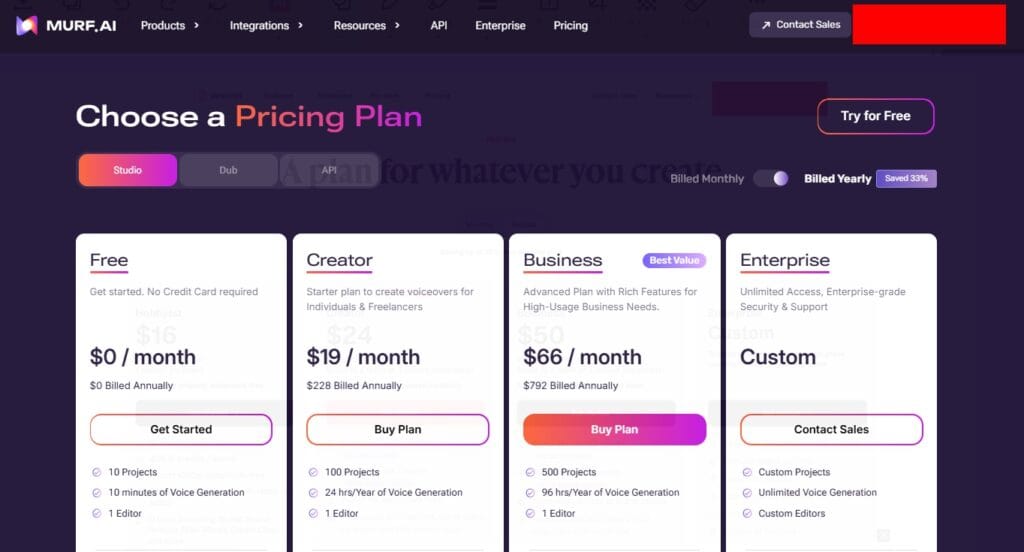
If you are a solo creator and want the closest thing to a practical ElevenLabs alternative, Murf AI is probably the first tool I would test.
It is not better than ElevenLabs overall, but it does a lot of things right. The interface is clean, the workflow is simple, and for normal creator use cases like YouTube narration, e-learning, and marketing voiceovers, it is more than good enough.
What makes Murf AI attractive is that it feels usable almost immediately. You do not need a complicated setup, and you do not need to fight the interface just to get decent output. That matters more than people think.
Its biggest strength is balance. It gives you strong voice quality, enough editing control, and a creator-friendly workflow without making the whole process feel technical.
That said, it is not perfect. A lot of the more advanced features are pushed into higher-tier plans, and if you are producing a large amount of long-form content, you may start to notice limitations.
My take: if you are a solo creator and want something simple, polished, and easy to work with, Murf AI is probably the safest alternative to start with.
2. Play.ht — Best for Blog Audio and Light Voiceover Work
Play.ht makes sense if your use case is lighter and more specific.
If you run a blog and want to turn articles into audio, or if you need straightforward English text-to-speech without a heavy production workflow, Play.ht is worth a look. The WordPress integration is a real advantage here.
This is one of those tools that looks very appealing on paper. Good voice quality, clean UI, and useful integrations. For some people, that will be enough.
But the problem is reliability.
When a tool is part of your content workflow, stability matters almost as much as output quality. And Play.ht has enough complaints around uptime, processing delays, and support responsiveness that I would not commit without testing the free version first.
So I would describe it like this: good fit for lighter use cases, weaker fit for people who need stability every day.
My take: worth trying if you mainly care about blog audio or simple English TTS. But test it first. I would not go all in without making sure the workflow is stable enough for you.
3. Descript — Best for Video and Podcast Creators
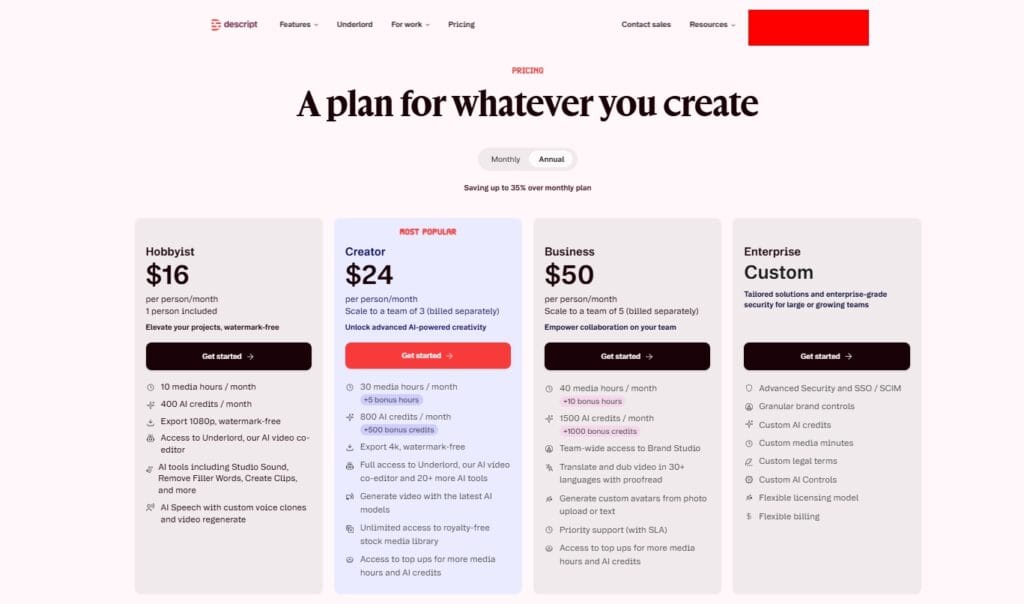
Descript is a different type of product.
It is not the best choice if you only want text-to-speech. But if you already work with video, podcasts, subtitles, screen recording, and editing, then Descript becomes much more interesting.
The reason it belongs on this list is Overdub. If you want to fix parts of your voice recording by typing instead of rerecording, that feature is genuinely useful. For creators, that can save a lot of time.
This is really an all-in-one workflow tool, not just a voice tool.
That is both its strength and its weakness.
If your content pipeline includes editing anyway, Descript can make a lot of sense. But if you are just looking for a clean AI voice generator, it is more tool than you need. And once projects get heavier, some users do feel the lag.
My take: great choice for YouTubers and podcasters who want voice tools inside a broader editing workflow. Not the best pick if your only goal is simple, high-quality TTS.
4. Speechify — Best for Accessibility and Personal Listening
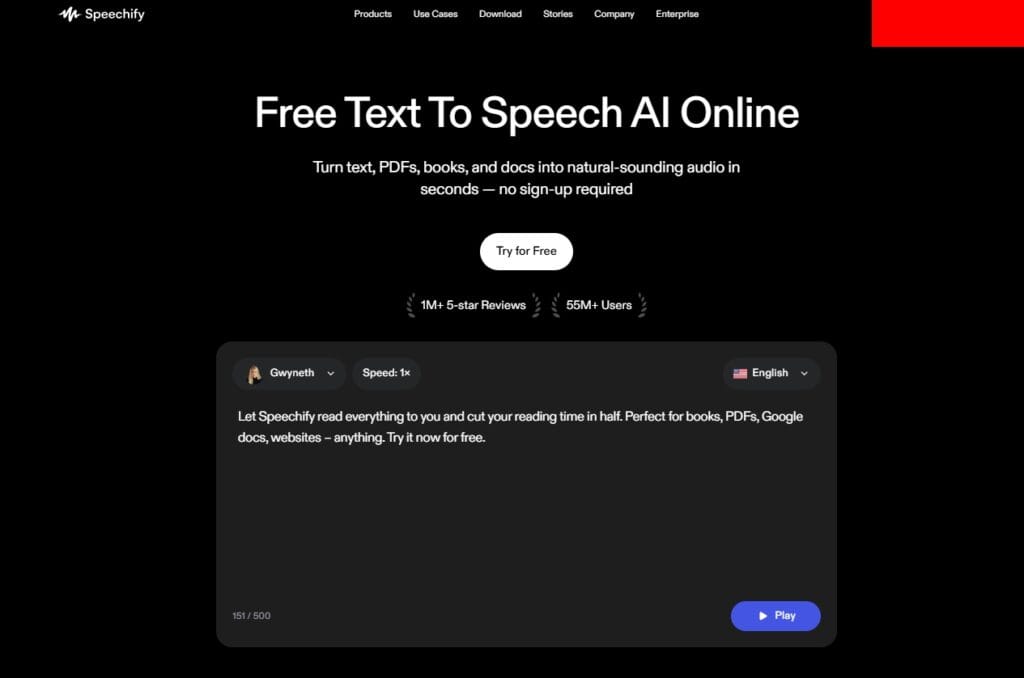
Speechify is the least direct ElevenLabs alternative on this list.
That is not a criticism. It just means you need to understand what it is actually built for.
Speechify is strongest when the goal is listening rather than producing. If you want to listen to articles, PDFs, documents, or research materials, it does that very well. For students, researchers, and people with heavy reading workloads, that can be genuinely valuable.
But for content creation, it is a weaker fit.
You do not get the same kind of control, production flexibility, or creator-focused workflow that you would expect from tools like ElevenLabs or Murf AI. So I would not recommend it as a primary voiceover tool unless your needs are very basic.
My take: excellent for productivity and accessibility. Weakest option here if your goal is serious content creation.
5. Cartesia — Best for Developers and Real-Time Applications
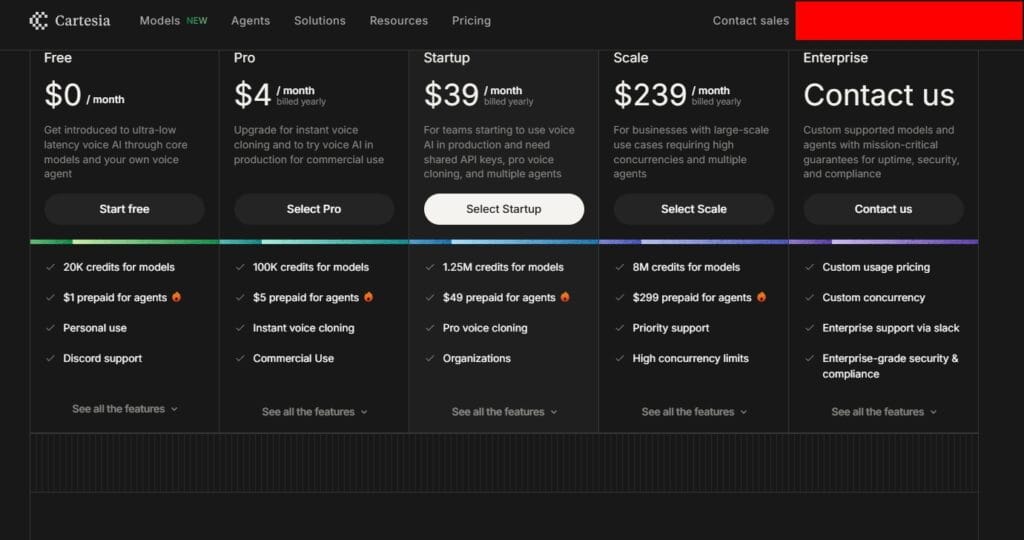
Cartesia is the one I would separate from the others immediately.
This is not mainly for bloggers, YouTubers, or normal solo creators. This is for developers building real-time voice products, AI agents, call systems, or conversational apps.
From a technical point of view, it is extremely strong.
Low latency matters a lot in real-time voice experiences, and Cartesia is one of the few tools on this list that feels built for that kind of environment from the start. If you are building product infrastructure instead of just making content, this becomes much more relevant.
The problem is obvious: most people do not need that.
If you just want to paste text and generate a nice voiceover, Cartesia is overkill. The technical strength is real, but the usability gap is also real for non-developers.ElevenLabs for developers. Not the right tool for creators who want a point-and-click interface.
My take: probably the strongest technical alternative to ElevenLabs for developers. Not a good fit for creators who want a simple visual workflow.
Which ElevenLabs Alternative Should You Choose?
If you want the most practical alternative for normal creator work, start with Murf AI.
If you are mainly turning blog posts into audio, try Play.ht.
If you already edit videos or podcasts and want everything in one place, Descript makes the most sense.
If your main goal is listening to documents rather than producing content, Speechify is the right tool.
If you are building a real-time product or voice app, Cartesia is the serious option.
And if your main priority is still the best overall voice quality and creative flexibility for content creation, then honestly, ElevenLabs is still the benchmark.
That is really the conclusion.
A lot of these alternatives are good. Some are even better than ElevenLabs in specific situations. But for solo creators who want strong voice quality, broad use cases, and flexible creative output, ElevenLabs is still the default standard.
Check out my full ElevenLabs review → to see how it compares in a real content workflow.
Frequently Asked Questions
What is the best free ElevenLabs alternative?
Murf AI offers the most usable free tier for content creators. Speechify is excellent if your goal is reading documents aloud rather than producing voiceover content.
Is Murf AI better than ElevenLabs?
For solo creators who want an easy-to-use interface and solid voice quality, Murf AI is a strong competitor. ElevenLabs still leads on raw voice naturalness and creative control, but Murf AI is close enough for most use cases — and its free plan makes it easy to test.
Which ElevenLabs alternative sounds the most realistic?
Cartesia’s Sonic model produces voices that are technically very close to ElevenLabs in blind tests. For non-developers, Murf AI is the most realistic-sounding option with an accessible interface.
Why do people look for ElevenLabs alternatives?
Common reasons include pricing (ElevenLabs’ free plan has limited monthly character output), the need for specific features like built-in video editing (Descript), or real-time API performance (Cartesia). Some users also find certain alternatives better suited to specific languages or use cases.
Final Thoughts
ElevenLabs is still the strongest overall AI voice tool for most content creators. But that does not mean it is always the smartest choice.
The smarter question is not “What is the best tool?”
It is “What is the best tool for the way I actually work?”
If you are a solo creator, Murf AI is probably the cleanest alternative to test first. If you are inside a video or podcast workflow, Descript makes more sense. If you are building a product, Cartesia is in a different category entirely.
So yes, ElevenLabs is excellent.
But depending on your workflow, it may not be the tool you actually need.
If you’re still weighing whether ElevenLabs is worth it at all, this breakdown of ElevenLabs pricing might help you decide.
Some links in this post are affiliate links. This means I may earn a commission if you sign up — at no extra cost to you. I only recommend tools I’ve personally researched and believe are worth your time.